


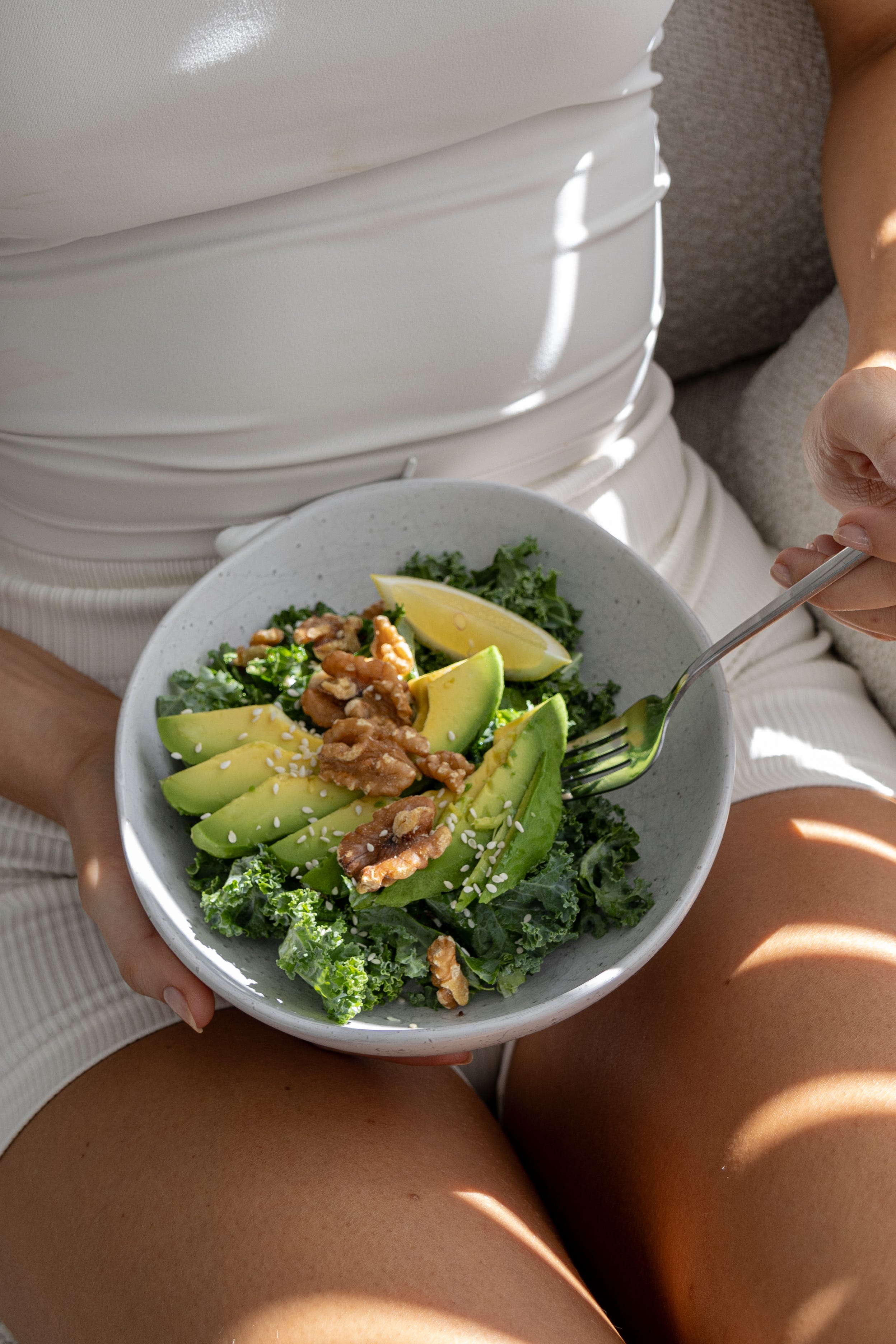
Eating like you love yourself has been co-opted by the wellness industry to mean something exhausting. It means organic everything. It means meal prepped containers lined up in the fridge like a fitness influencer lives in your kitchen. It means reading every label, avoiding every ingredient you can’t pronounce, and feeling vaguely guilty about anything that arrived in a package.
That’s not self love. That’s anxiety with a better aesthetic.
Eating like you actually love yourself is quieter than that. Less photogenic. Considerably less expensive. And it starts not with what you eat but with how you relate to the act of eating itself.
What It Actually Looks Like
It looks like a Greek salad with spring mix added because you felt like it — cucumber, tomato, olives, feta, dressed simply, eaten slowly, at an actual table with an actual fork. Not at your desk. Not standing over the sink. At a table, like a person who has decided her meals are worth sitting down for.
It looks like grilled chicken that you seasoned properly because you’re worth the extra thirty seconds of seasoning. Vegetables that are cooked the way you like them, not the way a macro calculator suggested. A yogurt bowl in the morning that hits every craving before the day has started and tastes like someone who loves you made it.
It looks like understanding that protein keeps you full, vegetables make you feel good, and eating in a way that stabilizes your blood sugar rather than spiking and crashing it is one of the most effective things you can do for your energy, your mood, and your skin — and then doing that most of the time, loosely, without making it a religion.
The Part About the Burger
Sometimes eating like you love yourself looks like a burger by the beach. Or wherever you are. The location is flexible. The permission is not.
The specific pleasure of sitting somewhere you love, eating something you genuinely want, with a Coke Zero that is objectively terrible for you and tastes like a Tuesday afternoon off. Not photographed, or justified. Not balanced against something virtuous earlier in the day.
Just enjoyed. Fully. Without the running commentary about whether you should have ordered the salad.
That is also self love. The version that understands food is not just fuel — it is pleasure, memory, culture, comfort, and one of the more reliable ways to feel like a human being who is present in her own life.
The woman who eats well most of the time and enjoys a burger without guilt occasionally is not failing at wellness. She has understood something that most wellness content is actively trying to prevent her from understanding.
What Gets in the Way
The voice. You know the one. The one that narrates every meal with a running assessment of whether this was a good choice or a bad one. That categorizes food as clean or dirty, virtuous or indulgent, earned or unearned.
That voice is not self love. That voice is the opposite of self love wearing self love’s clothes.
Eating like you love yourself requires evicting that voice from the dinner table. Not permanently silencing it — it’s been there a long time and it doesn’t leave quietly. But refusing to let it run the meal. Eating the thing. Tasting it. Moving on.
Food is not a moral category. What you eat for lunch does not say anything about who you are as a person. The sooner that lands, the quieter mealtimes get
.
The Practical Version
Because aspiration without direction is just a mood board:
Eat real food most of the time. Not perfectly, not obsessively — just mostly things that came from somewhere rather than nowhere.
Protein at every meal because your body runs better on it and you’ll stop thinking about food an hour later.
Vegetables because they make you feel good and your skin will confirm this within a week.
Something that stabilizes your blood sugar rather than sending it on a rollercoaster and then wondering why you’re raiding the pantry at 3pm.
Sit down when you eat. This sounds small. It isn’t.
Eat without your phone when you can manage it. Actually taste the food. Notice when you’re full rather than looking up from the screen and discovering the plate is empty.
Cook for yourself occasionally with the same care you’d bring to cooking for someone you love. Season things properly. Use the good olive oil. Set the table even if it’s just you.
And when you’re sitting by the beach with a burger and something cold and slightly poisonous — enjoy every single bite.
That’s the whole practice.
What It Adds Up To
Not a perfect diet. Not a transformation. Just a quieter, more generous relationship with one of the things you do every single day of your life.
Food that mostly nourishes you. Meals that sometimes delight you. A voice in your head that has learned to say that was good instead of should you have done that.
That’s eating like you love yourself.
It tastes better than you’d think.


About Synced
We write about the body, the mind, the rituals, the science, and the occasional beautiful waste of a Sunday afternoon. Honestly, with a little humor, and always with the assumption that you’re a smart woman who can make her own decisions.
Some women find Synced and learn something new. Most find it and finally feel like someone’s speaking their language
.