



At some point in the last two years, cycle syncing went from a niche concept discussed in integrative health circles to something your algorithm serves you seventeen times a day alongside a supplement stack and a pastel-colored planner specifically designed for your luteal phase.
Which is how you know it’s arrived. And also how you know it’s time to separate what’s actually happening in your body from what someone is trying to sell you because of what’s happening in your body.
Here’s the honest version.
What Cycle Syncing Actually Is
Cycle syncing is the practice of adjusting your food, exercise, work, and lifestyle habits to align with the four phases of your menstrual cycle — menstrual, follicular, ovulatory, and luteal.
The premise is straightforward: your hormones fluctuate significantly across your cycle, and those fluctuations affect your energy, mood, metabolism, strength, cognitive function, and about a dozen other things you’ve probably been attributing to personality or bad luck.
Working with those fluctuations rather than against them — eating, moving, and scheduling in ways that support what your body is already doing — is the core idea. And the core idea is legitimate.
Your hormones are not static, and your body is not the same on day three as it is on day fourteen. Pretending otherwise and then wondering why some weeks feel effortless and others feel like moving through concrete is, to put it gently, not serving you.
What the Science Actually Says
Here’s where it gets nuanced — because the wellness industry would like you to believe that cycle syncing is either a complete revelation that will transform your entire existence, or dangerous pseudoscience with no basis in reality. As usual, the truth is considerably less dramatic than either camp would like.
What research does support:
Your metabolic rate increases in the luteal phase — the two weeks before your period — meaning your body is burning slightly more calories and often craving more food. This is not a character flaw. This is physiology. Eating more during this phase is not failing your diet. It’s feeding your body what it’s asking for.
Strength and performance tend to peak in the follicular and ovulatory phases — roughly days one through fourteen — when estrogen is rising. Several studies have found that women training in sync with these phases showed greater strength gains than those following a standard linear program.
Pain sensitivity increases in the luteal phase and during menstruation. This is why the workout that felt manageable last week feels unreasonably hard this week. You are not getting weaker. Your hormones shifted.
Cognitive function, verbal ability, and social ease tend to be strongest around ovulation when estrogen and testosterone peak together. The presentation you nailed, the conversation that flowed effortlessly — there’s a reasonable chance your cycle was working in your favor.
What research does not support — at least not yet — is the extremely specific prescriptive advice that the internet loves to dispense. Eat only these seventeen foods in your luteal phase. Do exactly this type of exercise on day nine. Avoid all social engagements during menstruation. The broad strokes are supported. The granular detail is mostly extrapolation dressed up as science
What’s Being Sold to You
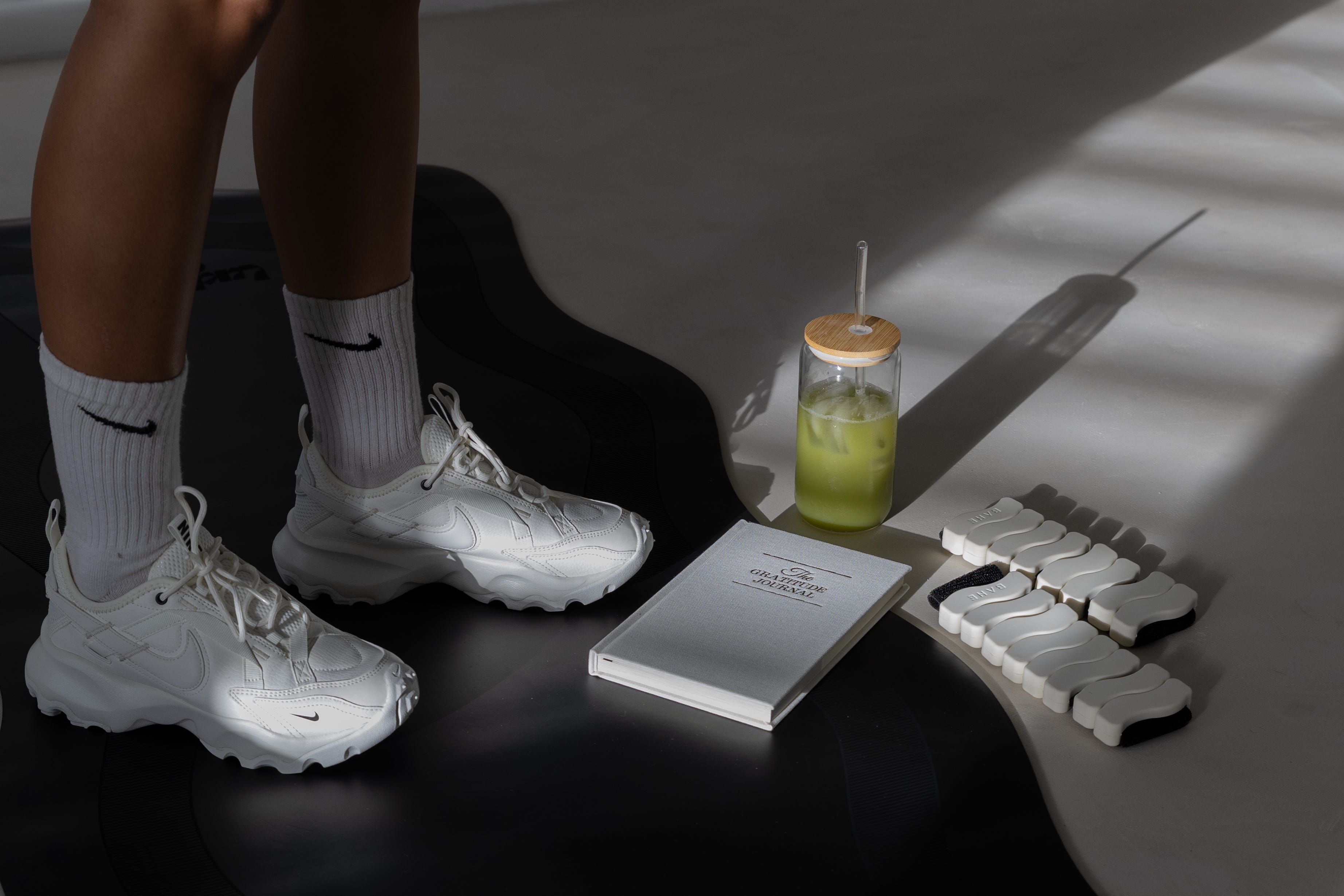
Let’s talk about the moon journal.
The cycle syncing industry — and it is an industry — has attached itself to legitimate hormonal science and used it to sell you a remarkable quantity of things you do not need. Cycle-specific supplement stacks. Phase-based meal plans at $47 a month. Apps that tell you when to have difficult conversations based on your cycle day. Retreats. Courses. Coaches. An entire aesthetic built around the idea that your body is a mystical feminine force that requires constant tending and a significant financial investment.
Some of this is harmless. Some of it is expensive nonsense. All of it requires you to know the difference.
The difference is this: does it require you to understand your body better and work with it more intelligently? Probably worth exploring. Does it require you to buy something specific to do that? Probably not.
Who This Actually Works For
Cycle syncing in its practical, unglamorous form is most useful for women who have a fairly regular cycle and want to understand why their energy, mood, and performance vary across the month — and what to do about it.
It is less useful if you have a highly irregular cycle, are on hormonal birth control which suppresses the natural hormonal fluctuations cycle syncing works with, or are in perimenopause where the patterns become less predictable.
It is not a cure for PMDD, endometriosis, PCOS, or other hormonal conditions — though understanding your cycle is never unhelpful when navigating these. If you’re dealing with any of these, a conversation with an actual doctor who takes your symptoms seriously is worth more than any amount of cycle syncing content.
What We’re Going to Do About It
Over the next four weeks we’re going to walk through each phase of the cycle — what’s actually happening hormonally, what that means practically for your food, movement, energy, and mood, and what you can actually do about it without overhauling your entire life or buying anything.
No moon journal required. Though if you have one and you like it, we’re not here to take it from you.
The science is real. Your hormones are real. Your experience of your own cycle is real.
Everything else is negotiable.
This post is intended for general informational purposes. It is not medical advice. If you have concerns about your cycle or hormonal health, please consult a qualified healthcare provider who actually listens to you.


About Synced
We write about the body, the mind, the rituals, the science, and the occasional beautiful waste of a Sunday afternoon. Honestly, with a little humor, and always with the assumption that you’re a smart woman who can make her own decisions.
Some women find Synced and learn something new. Most find it and finally feel like someone’s speaking their language

.